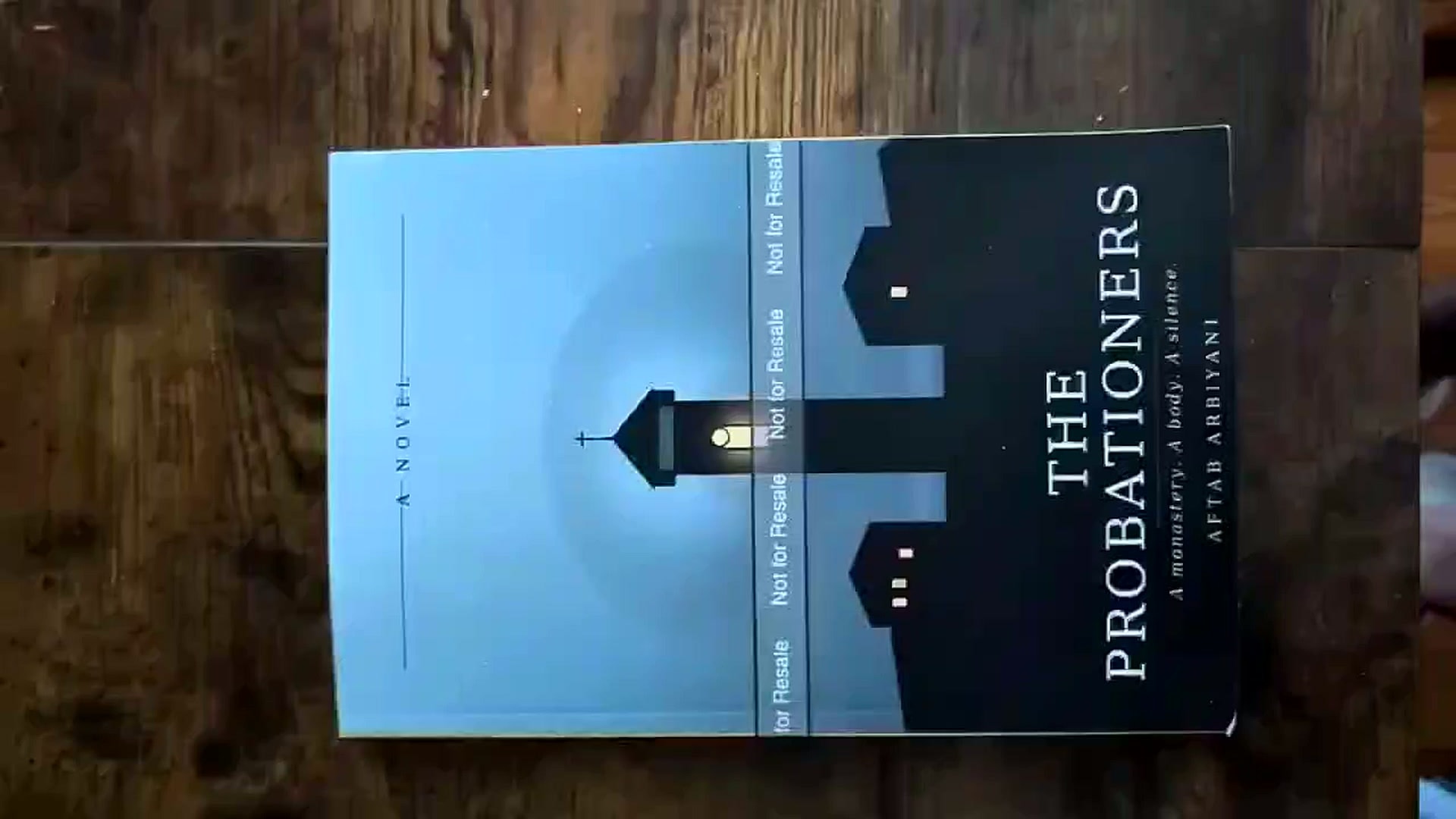
The first time I saw my paperback, it was nearly midnight and I was watching a video on my phone.
It came from my school friend Yagnee's living room in the United States, half a planet from my desk in India. The book had just arrived at her door, because it could not arrive at mine. She turned it over on camera. She held the spine up to the light. Two years of writing, 102,000 words, 361 pages, and my first contact with the finished object was footage of it in hands that were not mine.
I paused the video on the spine. The spine was correct. I have never been so relieved by 0.902 inches.
Amazon will print my book for the world. Just not for me.
In my last post about publishing this book, I left one question open: whether KDP could actually deliver a printed copy to my address. Amazon has no print facility in India. Copies print at whichever press is nearest and ship from there, and I wrote that I would only find out at checkout whether mine could reach me.
I found out. It could not.
What I had instead of a shipping route was Yagnee. I messaged her on Instagram to ask for her address, which is a strange message to send an old school friend: can my book come and live at your place for a while. She said yes. I ordered the author copy to her door first, and published the book after, which means the paperback went live before I had ever touched one. The order itself went through like it was nothing, because the order was never the problem. The destination was.
If you are publishing from a country Amazon does not print in, arrange your person abroad before you need one. You will be going live on the strength of the digital previewer either way; I had verified my files half to death, and still, nothing settles the stomach like watching someone you trust turn the finished book over on camera.
The cover was not finished being difficult
I thought the production war ended when the spine math worked out. The margins, the blank pages, the table of contents, the cover rebuild: all of that is in the earlier post, and I am not repeating it here.
Then KDP rejected the cover anyway. Twice. Barcode.
Amazon prints its own barcode on the back of every paperback, and it needs a clean, light-coloured rectangle waiting for it in the lower right corner. I had left a placeholder box for exactly this. What I had not understood is that KDP ignores your placeholder completely. It stamps the barcode where it wants, which on my cover was higher and further left than my box: directly across the last sentence of my author bio, printed on a near-black footer. Moving my box could never fix that, because my box was never being consulted.
The fix was surgical and slightly insulting. I deleted the final sentence of my own bio to clear the ground, painted a genuinely white rectangle at the spot Amazon actually uses, and resubmitted. Accepted. The bio now ends on "to protect the life they have built," which I have decided is the better closing line anyway.
Sometimes the machine edits you.
Rejected over a hyphen
Medium verifies book authors. You submit your book's details, they check them, and a blue badge appears next to your name. I wanted it, and not only for vanity. It tells a reader who lands on one of these essays that there is a book behind them.
Two things I learned.
First, verification runs on ISBNs and nothing else. An ebook published through KDP has an ASIN, and ASINs are explicitly not accepted. So the paperback was not a nice-to-have here. It was the qualifying edition. The free ISBN that KDP assigns to a paperback is the thing that makes you eligible at all.
Second, my first application was rejected, and the cause was a hyphen. I had entered the ISBN with one hyphen removed. Everything I read said this should be fine; the thirteen digits are the identifier and the hyphens are decoration. The rejection arrived regardless. The second application, with the number copied character for character from the copyright page, went through.
I have spent a career writing validation code that normalises input before comparing it. Losing to punctuation in a numeric field was a humbling experience. Copy the ISBN. Do not type it. Do not tidy it.
The website I had not planned to build
Goodreads runs an author programme, and claiming your book there is one of the few genuinely high-leverage free moves available to a new novelist. The author profile is where readers land when they search your name, and where the ratings collect.
The application asks for a website.
You can get by with a social link. I did not want to get by. A profile on someone else's platform is a rented room, and the whole point of the exercise was an address of my own. So I built one over a weekend I did not have: aftabarbiyani.com. An about page, a page for The Probationers, a blog, a reader Q&A, and a newsletter signup, all on my own name as the domain, so it outlives this book and has space for the next one.
My Goodreads author profile is live now, with the site standing behind it. And the site changed how I publish. Every essay I post here also goes up on my own blog. Medium brings the readers; the domain keeps the archive and the search results on my name; the newsletter collects the people who want to know when the next book exists. One piece of writing, three jobs.
Six months married, one book to sell, one job to keep
Here is the part I have not solved.
Book marketing is not a task. It is a tap that never turns off: ads, reviews, keywords, categories, essays, replies. It will take every hour you hand it and ask about the next one. And I do not have spare hours. I have a full-time engineering job, and I have a marriage that is six months old. The marriage is the newest thing in my life. It does not deserve my leftovers.
So I am deliberately doing less marketing than the book could use. Some weeks the ad campaign goes untouched. Some weeks the essay does not get written.
I allowed myself exactly one new channel: an Instagram account for the writing, @aftabarbiyaniwrites, kept separate from my personal account on purpose. The writer gets a room of his own, and the rest of my life keeps its door closed. Instagram had also just carried the message that got my book to Yagnee's doorstep, so the platform had earned a little goodwill. It is small and it is new, and I am fine with both.
If you are also publishing a first novel out of the margins of a full life: the book waited two years to exist. It can wait a Sunday.
The photograph
One confession left.
There is no photo of me anywhere. Not on Medium, not on Goodreads, not on my own website, not even on the new Instagram, where the book appears and I do not. Every profile I have spent months building has a grey placeholder where a face should go.
Two reasons, and only one of them is respectable. The respectable one is that no photo I own feels good enough. They are all pictures of a man at a wedding or at a desk, and none of them look like someone who wrote a mystery set in the snow. The true one is that I am shy. A novel is a private act performed in hope of a public result, and I have been glad to push the book forward and stand behind it. A photograph is the one deliverable that cannot be drafted, revised, and approved on the tenth pass.
But it matters, and I have stopped pretending otherwise. Readers trust faces. Medium's own verification checklist expects a profile picture. An author page with an empty circle at the top quietly says unfinished, and after the margins and the barcode and the hyphen, unfinished is the last word I want attached to any of this.
So it is on the list, somewhere between the ad campaign and the second novel: an afternoon, decent light, a friend with a camera, and me sitting still for it.
The next one of these essays might have a face next to the byline. You will know it when you see it.
The Probationers is a closed-circle murder mystery set across seven snowbound days in a Benedictine monastery in the Umbrian hills. It is available on Amazon as an ebook and a 361-page paperback. I write at aftabarbiyani.com, and now, quietly, at @aftabarbiyaniwrites.