Press
Press & Media Kit
Everything you need to feature Aftab Arbiyani and his debut mystery The Probationers: ready-to-use bios, a book fact sheet, the synopsis, cover art, and suggested interview questions. For anything else, get in touch.
Press contact
Interviews & review copies.
For interviews, review copies, event and book-club requests, or high-resolution assets, contact Aftab Arbiyani directly:
Email: aftabarbiyani@gmail.com
Author bio
Bios, ready to paste.
One line
Aftab Arbiyani is a software engineer and debut novelist whose psychological mystery The Probationers is a locked-room murder set in a snowbound Italian monastery.
Short (approx. 50 words)
Aftab Arbiyani is a psychological mystery writer and software engineer based in India. His debut novel, The Probationers, is a closed-circle murder mystery set inside a snowbound Benedictine monastery in the Umbrian hills. He writes locked-room fiction for readers who believe a mystery should earn its ending. A second novel is underway.
Long (approx. 150 words)
Aftab Arbiyani is a software engineer, technical lead, and debut novelist based in India. By day he designs and builds large-scale backend systems. He has done this for more than five years and now leads engineering at SolGuruz; he studied Computer Engineering at Government Engineering College, Bhavnagar. By night he writes psychological mystery fiction.
His debut novel, The Probationers, is a closed-circle murder mystery set across seven snowbound days in a Benedictine monastery in the Umbrian hills, where a priest is found dead at the foot of the bell tower and a canon lawyer is sent to find the truth before the civil authorities arrive. The book grew out of a long fascination with closed systems and hidden logic, the same instincts that shape good software, turned on a locked-room mystery. He writes for readers who believe a mystery should earn its ending, and a second novel is on the way.
The book
Fact sheet.
Synopsis
Short & long.
Logline
The Probationers is a closed-circle mystery set across seven snowbound days in a Benedictine enclosure in the Umbrian hills. A priest is found dead at the base of the bell tower. A canon lawyer is sent from Rome to find out what happened before the civil authorities arrive. She has seven days, and six novices.
Full synopsis
At the Abbazia di San Gerolamo, a Benedictine monastery high in the Umbrian hills, six postulants are halfway through the year that will decide the rest of their lives. On the morning of the mid-winter feast, the novice master, Father Tomaso Ricci, is found at the foot of the bell tower. It looks like a fall. It isn't. And by nightfall the snow has closed every road off the mountain.
Sister Aude Bellamy, a Dominican canon lawyer and former French magistrate, is sent to establish what happened before the civil authorities can reach the abbey. What she finds is a community bound by the Great Silence, where each postulant is guarding a secret they would do almost anything to keep, and where the line between confession and survival has quietly disappeared.
The Probationers is a locked-room mystery about belonging and exile, about what a person will do to stay inside the world they have built for themselves. It is written for readers who believe a mystery should earn its ending.
Assets
Cover & photography.
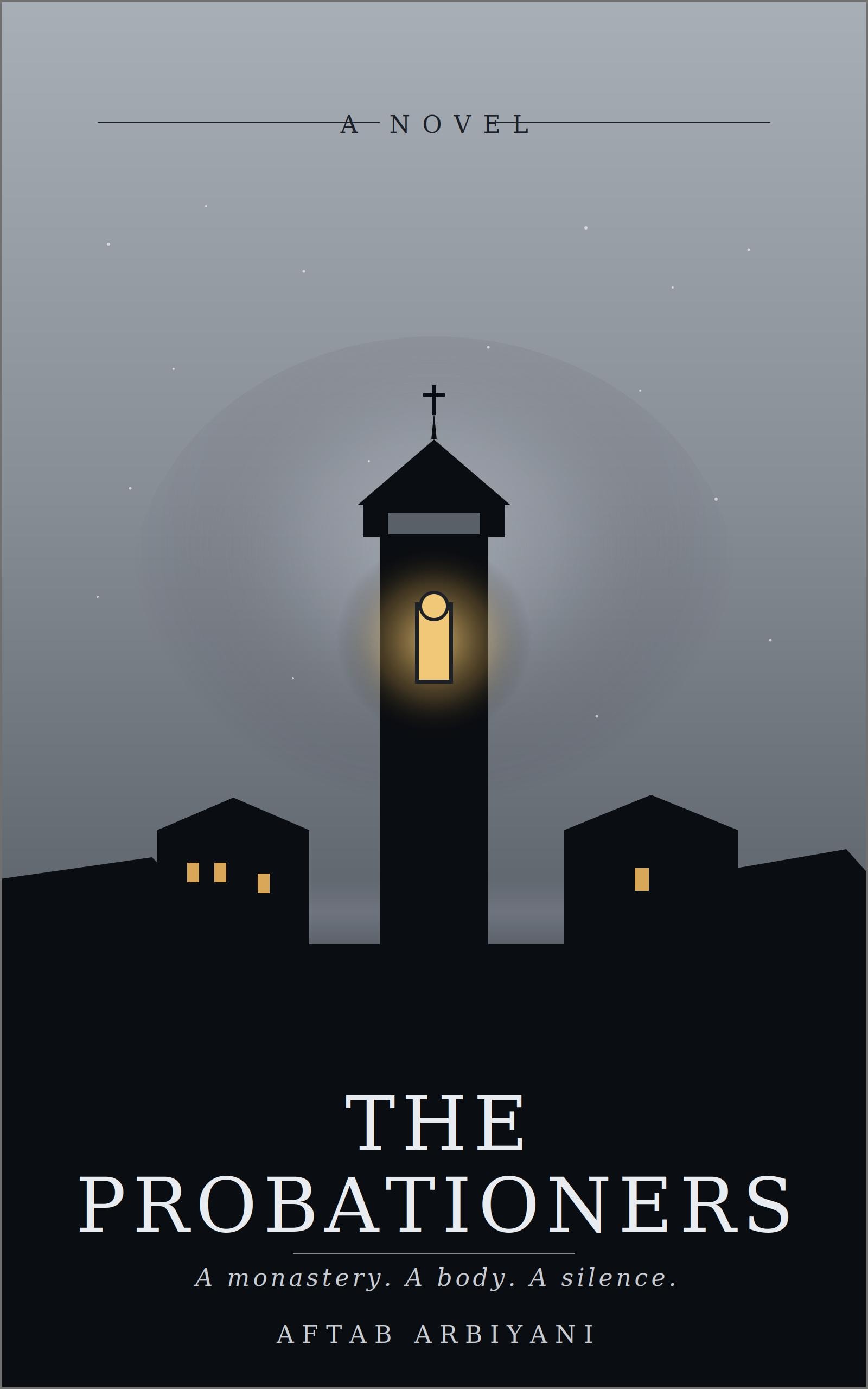
A high-resolution cover and an author photograph are available on request: email for assets. Please credit the cover art to the author.
For interviewers
Suggested questions.
A starting point for interviews, podcasts, and features: use, adapt, or ignore as you like.
- You're a software engineer by profession. How did that lead you to writing a locked-room murder mystery?
- Why set the novel inside a snowbound Benedictine monastery? What drew you to that closed world?
- The Probationers is a “closed-circle” mystery. What makes that structure satisfying to write, and to read?
- Your investigator is a canon lawyer rather than a detective. Why that choice?
- The book is about belonging and exile. What does that theme mean to you?
- What do you mean when you say a mystery should “earn its ending”?
- Which mystery writers shaped how you approach the genre?
- What can you tell us about the second novel?